10 Smart Money Habits That Will Change Your Financial Future
Your money is not just numbers in your account; it is a reflection of your habits, manner of thinking and discipline. Many people think that achieving financial success comes from making more, however it actually comes from managing better. Whether you are just starting out on your financial journey, or are looking to level up, these 10 intelligent money habits can completely change your financial future.
1️⃣ Document Every Transaction
Before you can control your money, you need to know where it is going (believe me – this is a crucial first step for you). Documenting every transaction, no matter how small it is, will help you to unveil your spending behaviours, and areas for unnecessary waste of your money. Use simple tools or apps to log your daily, weekly and monthly spending. Awareness is the first step towards improved decision making.
2️⃣ Follow the 50-30-20 Rule
A classic budgeting formula is as follows:
50% for need (bills, rent, essentials)
30% for want (shopping, dining, entertainment)
20% for savings and investing
That breakdown represents the balance in living for today while saving and preparing for tomorrow.
3️⃣ Automate Your Savings
The simplest means to save money consistently is to make it automated. Create automatic transfers from your salary account into a savings or investment account. Start treating savings like an expense that is non-negotiable rather than something you think about at the end of the month. The less you “think” about saving, the more frequent you will save.
4️⃣ Build an Emergency Fund
Life is unpredictable; a medical issue, loss of a job, or an unexpected expense can set you back and thwart your progress. Aim to save a minimum of 3–6 months of living expenses in a liquid fund or savings account. An emergency fund gives you peace of mind and keeps you away from credit in the event of a crisis.
5️⃣ Avoid Unnecessary Debt
Not all debt is bad. Productive debt, such as a mortgage loan or education loan, is okay, and can be a part of achieving your financial objectives. High-interest debt, such as credit cards or unsecured personal loans, can lead to a long-term repayment cycle if you are not very careful. Use debt wisely, pay off the balance quickly, and avoid borrowing to sustain a lifestyle.
6️⃣ Invest Consistently
Investing is not about seeing where the market is going; it is about being in the market for a long time. A consistent investment new like SIP (Systematic Investment Plans) will leverage compounding; your earnings have the potential to earn more earnings over time. Begin investing as soon as you can, and invest consistently before you want to spend it. Even ₹1,000 a month will compound over time into lakhs.
7️⃣ Expand Your Investments
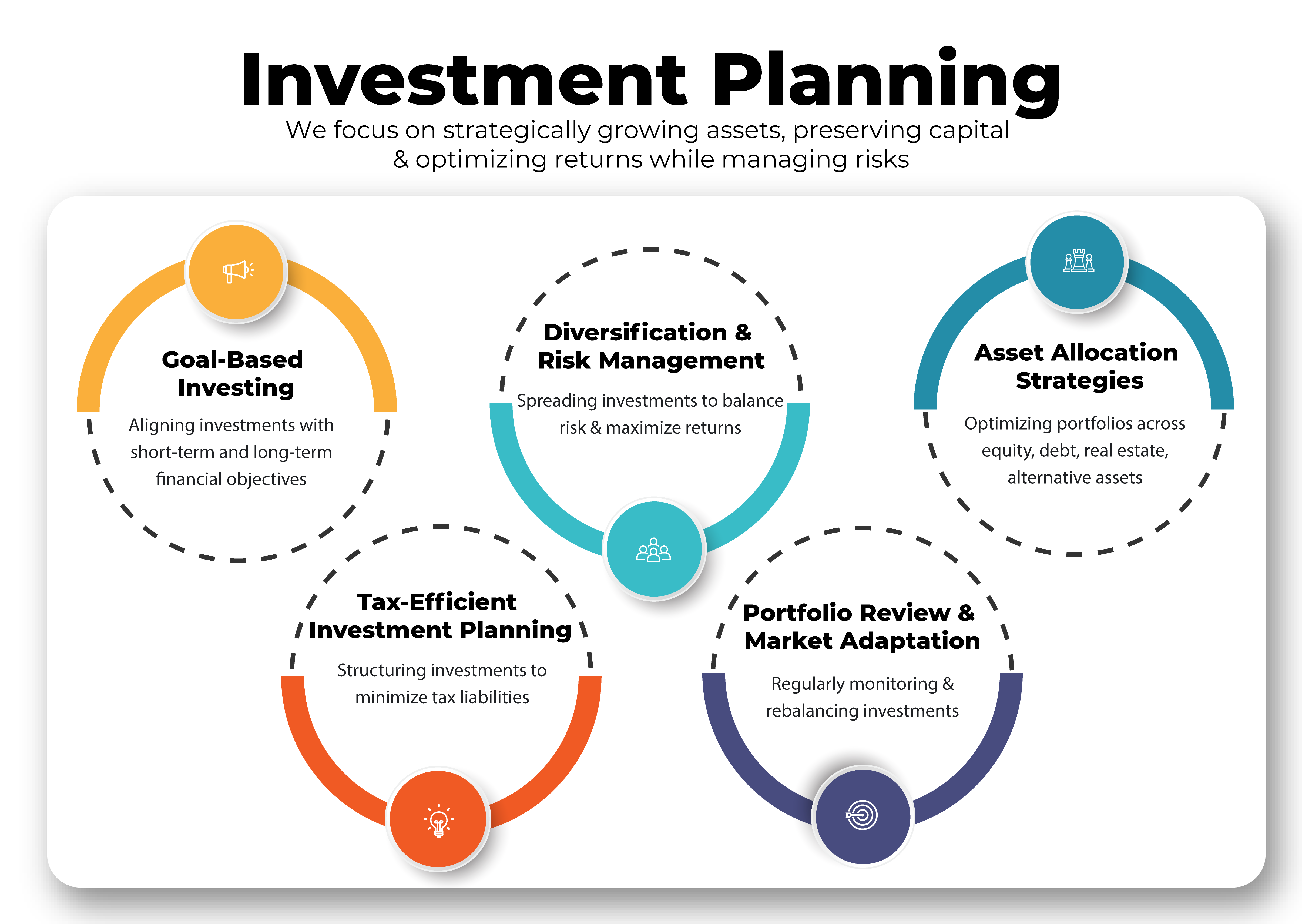
Do not rely on just one source of income or put all your money in one investment. Dispersed your money over several asset classes such as equity, debt, gold, real estate, and mutual funds. You will be better protected throughout market fluctuations and better able to grow your portfolio during more stable times through diversification.
8️⃣ Assess and Reallocate as Necessary
Your financial objectives change, the market changes, and so should your portfolio. Take a moment to review your finances every six months to every twelve months to review how you are doing regarding your financial objectives and to reallocate as necessary. If one asset class becomes a larger share of your portfolio than you feel comfortable with, then reallocate to bring your portfolio back to your desired risk profile.
9️⃣ Improve Your Financial Literacy
The greatest investment is an informed investment. Read finance blogs, listen to finance podcasts, watch invest-related videos, and/or attend workshops or webinars about finances. The more knowledge you have about how money works, the more confident you will be in making your own financial decisions. Just remember—your financial literacy will be compounding faster than any interest on your money.
🔟 Use the professional service of a financial advisor
Even the best clients in the world still need to speak with experts to obtain information that they had not considered. A professional financial advisor can help identify blind spots, optimize tax savings, and assist you in developing a plan that will bring together your many financial goals into an organized and simple process. Investing in expert advice will give you clarity through the uncertainty, providing you with a shortcut to make success more attainable in your life.
Final Thoughts
Managing your money isn’t about limiting you, it’s about allocating you. Developing small, repeated financial behaviours makes the difference between wealth (freedom), security, and peace of mind.
Take just one habit and begin it today. Start tracking your expenses this week. Start automating your savings next month. Over time you will be able to work on your relationship with money to go from a subjective to objective outlook.
At MY_OWN_CFO, we don’t believe in wealth just being about income, it’s about the strategy, awareness and discipline to handle one’s income (wealth), in order to build a financial road-map that will transform their entire future — not just income.
Begin today; your future self will be appreciative.
Related
Discover more from MyownCFO
Subscribe to get the latest posts sent to your email.